
Meniscal Injuries
Understanding meniscus tears and their treatment
The meniscus is a vital piece of cartilage in your knee that acts as a shock absorber and stabiliser during movement. Injuries to the meniscus are common and can occur from sudden twisting motions, sports injuries, or gradual wear and tear over time. Depending on the severity and type of tear, treatment options range from physiotherapy to surgical repair.
Dr George Awwad offers personalised care for meniscal injuries, helping patients recover function and return to their daily activities or sporting goals with the right treatment plan.
What is the meniscus?
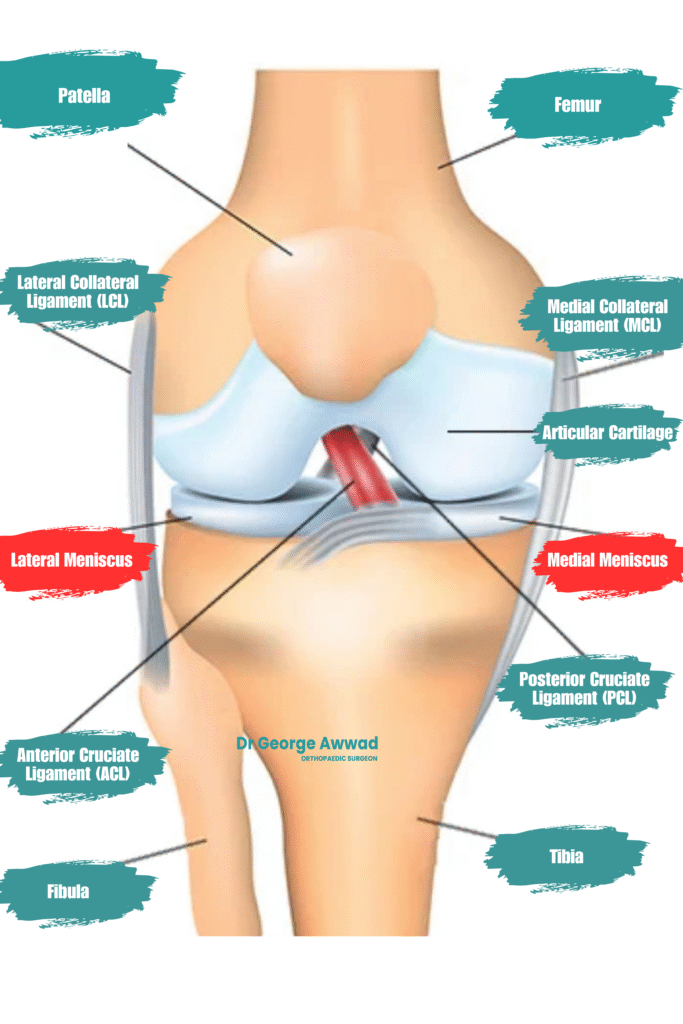
Each knee has two C-shaped cartilage structures called the medial and lateral meniscus. These sit between the thighbone (femur) and shinbone (tibia), cushioning the joint and supporting smooth movement.
- Distributes load across the knee joint
- Absorbs shock during impact activities
- Supports joint stability by guiding knee motion
- Protects the articular cartilage, which lines the bones
Common causes of meniscal injuries
1. Traumatic meniscus tears
- Sudden turns while the foot is planted
- Direct impact to the knee
- Deep squatting or heavy lifting
2. Degenerative meniscus tears
Types of meniscus tears
- Longitudinal (vertical)
- Radial (across the meniscus)
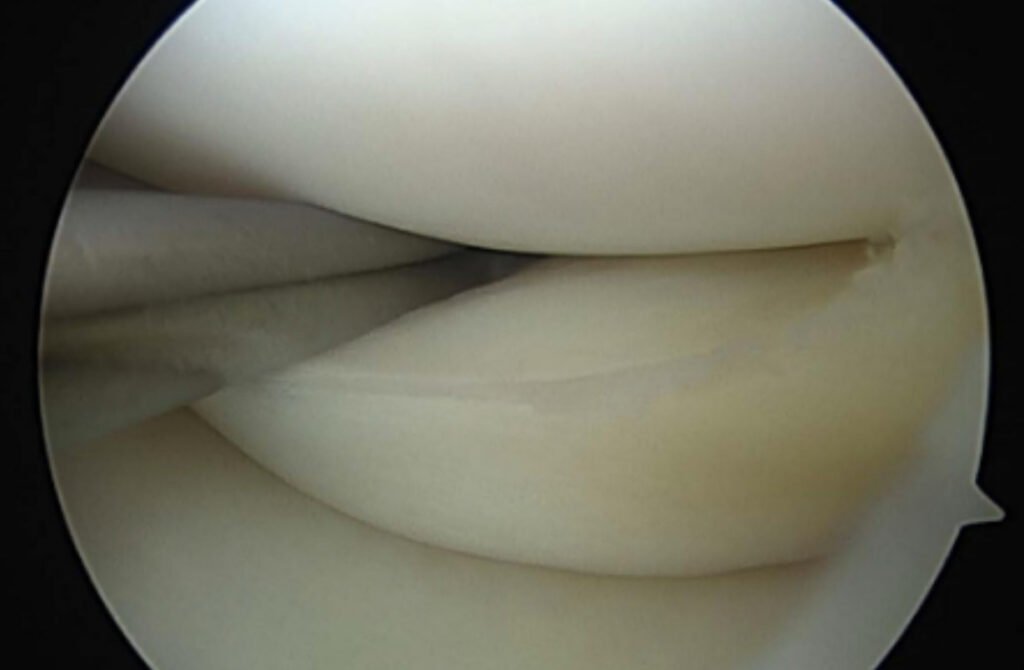
- Horizontal (cleaving the meniscus)
- Bucket-handle tears (a large flap that may cause the knee to lock)
- Complex tears (combination of multiple patterns)
Symptoms of a meniscal tear
- Sharp or localised knee pain, often on one side
- Swelling, either immediate or delayed
- A clicking, catching, or locking sensation
- Feeling of the knee giving way
- Limited range of motion
- Pain with twisting, squatting, or pivoting
Diagnosing meniscal injuries
Dr Awwad will assess your knee through:
- A detailed history of your symptoms and injury
- A physical examination to test for meniscal signs
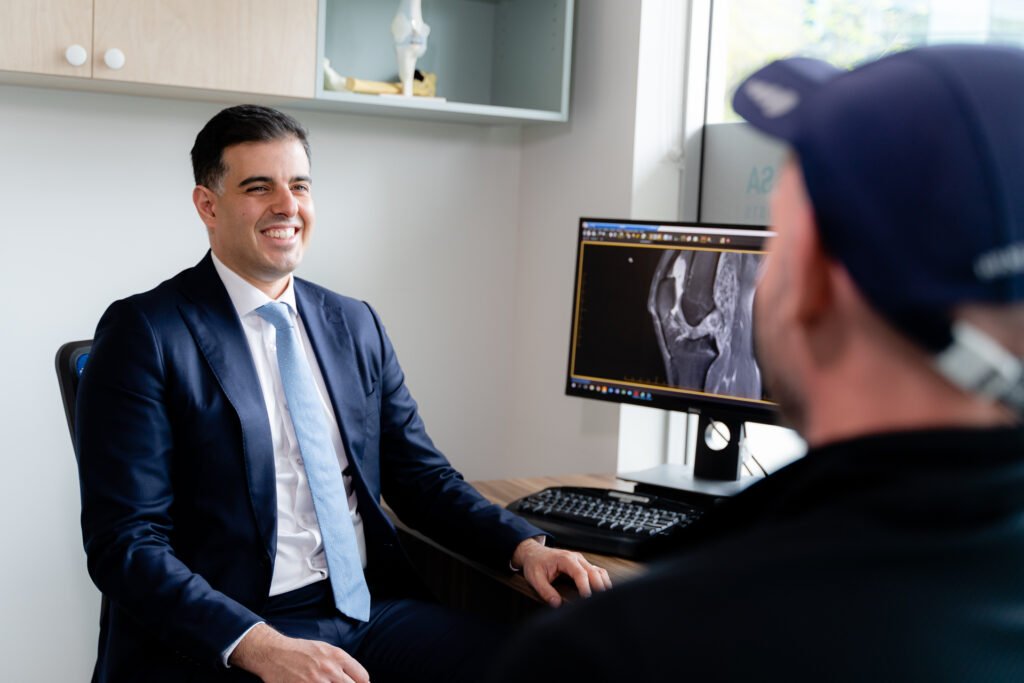
- MRI scans to confirm the location, type, and extent of the tear
- X-rays may be used to assess for arthritis or bony changes
Accurate diagnosis helps determine whether conservative or surgical treatment is more appropriate.
Treatment options for meniscal tears
Non-surgical treatments
- Rest and activity modification
- Anti-inflammatory medications
- Physiotherapy to strengthen supporting muscles and restore motion
- Injections (e.g. corticosteroids) in selected cases
Surgical options
- Suitable for repairable tears, especially in younger or active patients
- Small sutures are used to repair the meniscus via keyhole surgery
- Recovery includes a period of restricted weight-bearing
- In cases where repair is not possible
- Involves trimming and smoothing of the damaged meniscus
- May support pain relief and function but can increase long-term risk of osteoarthritis if too much meniscus is remove
When to seek treatment
If you are experiencing knee pain, swelling, or instability, especially following a twisting injury, it’s important to have your knee assessed. Early diagnosis and tailored treatment may help prevent further joint damage and support a faster return to activity. Dr George Awwad offers comprehensive care for meniscal injuries, from diagnosis and non-operative management to surgical repair when needed. He works closely with physiotherapists to ensure optimal recovery and return to movement.